ICELAND - Where Every View Tells a Story
- nancyporopat

- Sep 28, 2024
- 17 min read
Updated: Jan 3
I've never been a winter person. Ever since I was little, I loved summer, and every year I make sure to travel to warmer places to shorten the depressing cold season that has never inspired me much.
It was April, and the survival game was already in a fierce stage, with my head well up in the clouds. On Survivor, we often talked about the outside world, and travel was one of our favorite topics. I was thinking about what my next destination could be, considering I had half a year of pure summer ahead of me, and that’s when I got inspired by Iceland.
Located in the North Atlantic, Iceland is a country of astonishing contrasts. A land where fire meets ice, and the beauty of nature knows no bounds. From magnificent glaciers and powerful waterfalls to the famous geysers and hidden geothermal springs. From long black sandy beaches relentlessly battered by colossal waves to the calmest volcanic craters that you unexpectedly encounter just over the hills.
We bought our plane tickets about two months in advance directly from the PLAY airline, flying from Venice. €540 for two people was a good price considering the time we chose (the first week of September). I know that cheaper tickets can be found depending on the season, but this price was acceptable for us. We left our car at a private parking lot—Parcheggio San Marco, not far from the airport—for about €70 for seven days, which included a shuttle bus service (parking-airport, airport-parking).
The weather in Iceland was quite favorable for us, but the weather there is like severe PMS. From traumatic sleepless stormy nights to the sunniest mornings, and this happened several times a week. You can get used to anything, but we definitely chose the last throes of camping in a tent. We rented a car with a rooftop tent, through the GO Campers website. An employee from the company greeted us at the airport and took us to their office near the airport where we picked up the vehicle. Their website offers various options; from choosing a camper/car to a range of extras. We opted for the cheapest vehicle of that type because prices can reach crazy amounts with all the extras, but it’s worth getting something a little better. Mornings and evenings can be quite cold, so if I were to choose the same time to go to Iceland again, I would definitely go for a vehicle with an indoor sleeping space instead of a rooftop tent. One thing I definitely recommend is to get a 4x4 vehicle. For places like Landmannalaugar, which are in high altitudes, and the roads leading to them are true off-road tracks, you definitely need to be well-equipped. They offer several types of insurance—We chose the one that covers everything. The weather in Iceland should really not be underestimated, as any encounter with a strong storm can cause damage.
Two apps are really useful: Parka (for parking payment) and Safetravel – Iceland (for weather conditions, which you should follow, as some roads can be closed due to bad weather).
There are two supermarket chains: Bonus and Kronan. As the Icelanders say, Bonus is cheaper, while Kronan is nicer.
Absolutely everything and everywhere can be paid with credit cards, so we didn’t use cash at all.
DAY 1 - Arrival
We landed in Iceland around 6 PM, so we didn't have much time to wander. We picked up our vehicle, did some shopping, and headed straight to Reykjavik. We decided to leave the city tour for our last day, so we went directly to the campsite to be as rested as possible for the next day. We spent the night at Reykjavik Eco Camp, close to the city center. It cost us €40 for two people and the vehicle, which is the usual price for camps there (prices range from €30 to €40).
Every campsite has shared bathrooms that are generally well-maintained (of course, some are less clean—but reviews can help). In some camps, showers are included in the price, while in others, you pay separately. A 5-minute shower costs about €2 per person. I’m not extravagant while traveling, but a shower is a minimum I allow myself after a whole day of wandering. 😊
I advise booking camps in advance if you’re arriving in the late afternoon (same-day bookings are fine, just not last minute) because it can happen that you arrive and everything is full (that happened to us at the first camp we initially wanted). There’s also an option for a card that covers all camping costs in Iceland and costs €179, but you should assess whether it’s worth it for you.
DAY 2 – The Popular Golden Circle
The alarm woke us at 6:30 AM, and we snoozed until 7. The night was very restless and took a toll on us. This is perhaps the biggest downside of a rooftop tent: when the wind blows hard, it’s hard to get any rest.
We quickly got ready, turned on the country radio, and headed towards the Golden Circle. The classic Golden Circle tour, run by many agencies, starts in Reykjavik and then goes to Thingvellir National Park, followed by the Geysir area, Gullfoss waterfall, optionally Kerið crater, and a few other stops along the way. On recommendation, we decided to head to Geysir first to avoid the crowds, and that turned out to be the best decision.
First Stop – Geysir
By around 8:30 AM, we were already there, and it was truly amazing to watch Strokkur erupt every 5-10 minutes. Strokkur is the most active geyser in Iceland and the most famous geyser in the world. The original Geysir, from which all others got their name, has been dormant for a long time, but it is in the same geothermal area as Strokkur and erupts extremely rarely. There’s also a path leading to a viewpoint where you can observe the eruptions from a distance. Entry to the entire geothermal area is free, as it is at most places, but parking is usually charged (around €6-8). At Geysir, parking is free, but you can enjoy a great coffee—big Cortado is their Macchiato. That eternal struggle with coffee around the world! 😊


Second Stop – Gullfoss
Just as we were leaving Geysir, the buses started to unload. Our next stop was the Gullfoss waterfall, which means "Golden Falls." Perhaps the most powerful waterfall I have ever seen. The dramatic drop of 32 meters caused me a bit of anxiety since I’m scared of rivers, but this one was truly special. There’s a story that, in the early 20th century, foreign investors wanted to destroy the waterfall by building a hydroelectric power plant. However, the farmer’s daughter, who owned the land where the waterfall is located, fought fiercely against it and threatened to throw herself over the falls as an act of despair if construction began. The construction never happened, and I found out that no one has ever jumped into Gullfoss. In honor of the farmer’s daughter, Sigridur, there is a commemorative plaque at the waterfall.
Iceland is a wet land, so I recommend waterproof clothing and a waterproof case for your phone for such excursions. I wore quick-drying leggings throughout the trip, but for those who feel the cold more or for kids, I definitely recommend one or two pairs of waterproof pants over the leggings and a good jacket. Parking at Gullfoss is also free, and there’s a souvenir shop that isn’t any more expensive than others in Reykjavik.
Third Stop – Kerið Crater
The weather started to go downhill at Gullfoss, and we were quite frozen by the time we arrived at Kerið. Kerið is a volcanic crater believed to have formed when a volcano collapsed into its own empty magma chamber after an eruption, unlike some craters formed by explosive eruptions. At the bottom of the crater, there is a lake about 55 meters deep that you can descend to, and you can walk around the rim of the crater. It was so cold, and the wind became increasingly relentless, that we only walked partway around the crater before retreating to the warmth of the car.
Entry to the crater costs €4 per person, although we got the impression that not many people pay much attention to who enters. We left our Balkan mentality at home and paid the entry fee nonetheless. 😊
Fourth Stop – Secret Lagoon and Golden Domes
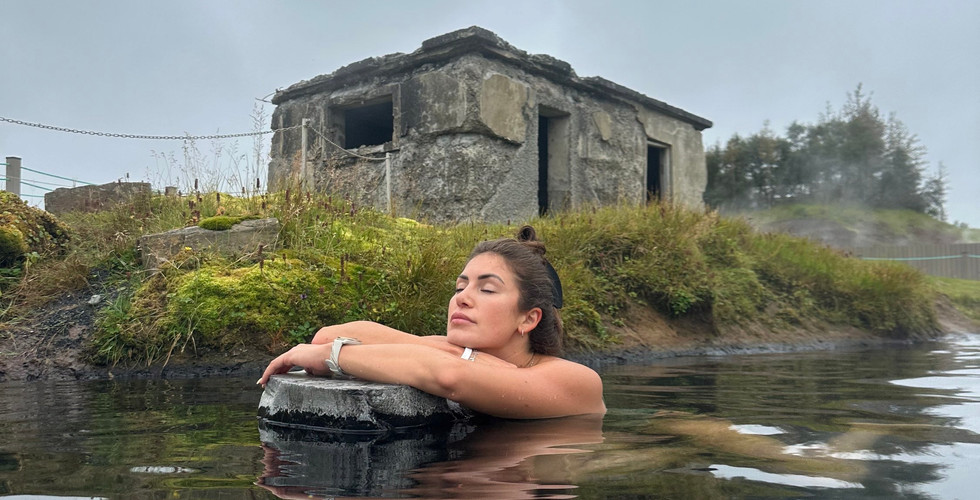
To end the day, there’s nothing better than a hot bath in a geothermal spring. Secret Lagoon is one of the oldest pools in Iceland, with water temperatures between 38-40 degrees Celsius. Since it wasn't peak season, we bought our tickets on-site for €24 per person. During peak season, it’s advisable to purchase tickets in advance.
After the lagoon, we headed to our accommodation, which was the only night we splurged on a stay in a Golden Dome tent, hoping to experience the Aurora Borealis. The season for the northern lights starts in September, but you can’t control nature, so unfortunately, we didn’t see it on this trip. The sky must be absolutely clear of clouds, and the lights are most visible between 11 PM and 2 AM. The day after we returned from our trip, I saw on Icelandic pages that the Aurora was visible everywhere, and now I’m tempted to go on a weekend trip just to witness it!
As for the Golden Domes – I definitely recommend it. The tent is a unique experience, but perhaps a bit overpriced. It was €435 for one night with a discount, so those who like it, go for it! 😊




DAY 3 – Seljalandsfoss, Skogafoss, Plane Wreck, Dyrhólaey, Reynisfjara
We woke up a bit later than planned, which caused us to be behind schedule. The day was perfectly sunny, the only sunny day we had, although I must admit I prefer Iceland gloomy and overcast! There’s a certain mystique to it that suits it so well.
We went for morning coffee at a nearby café, and from then on, we didn’t waste any more days on that. Every morning, we brewed coffee and poured it into a thermos, and we didn’t drink better coffee anywhere else. 😊
First Stop – Seljalandsfoss
We arrived to find buses already unloading crowds of people, so we turned around and continued on. We didn’t want to waste time at tourist-heavy spots with excessive crowds, so we decided to return later if there were fewer people.
Second Stop – Skogafoss
The same situation as with Seljalandsfoss, but a beautiful rainbow arched over the waterfall, prompting us to stay at least for a short while. Iceland offers so many natural beauties that you encounter at every turn, so we really didn’t get stressed if we missed something. Parking at Skogafoss is free, but in the evening, when day-trippers leave, the parking area serves as a campsite, and of course, there is a fee for that. It’s not highly rated in reviews, but since we didn’t stay overnight, I can’t tell you about it firsthand.
Third Stop – DC-3 Plane Wreck
This location, known as the Sólheimasandur Plane Wreck, is not far from the town of Vík, on the black beach of Sólheimasandur. It’s about a 45-minute walk each way to the wreck. The road there feels endless—terribly boring, flat, and monotonous, and the beach looks so close! A mirage of sorts.
There is also a truck that takes you to the wreck, but we thought the price was outrageous. A bit of exercise after all that driving is always welcome, and those short on time can skip this trip. The plane ran out of fuel mid-flight, and no one was killed in the crash, so it now rests on the black beach. It’s a cool sight for photos, but not necessarily a must-see. Parking is charged!


Fourth Stop – Dyrhólaey Hill
A small peninsula with indescribable scenery and the cutest lighthouse as a symbol of the area. Personally, it was one of the most beautiful sights we saw in Iceland. In the summer months, you can see the famous puffins, which consider Dyrhólaey their favorite nesting spot from May to August. Unfortunately, we didn’t see any as they had already migrated, but there are informative boards along the trail around the hill about the birdlife. Additionally, when it’s nesting season, access to certain parts of the hill is restricted, so check before your visit.
The name Dyrhólaey means "hill with a door," referring to the stone arch that rises above the Atlantic Ocean, allowing smaller boats to pass beneath it. From Dyrhólaey, there are stunning panoramic views of the sandy beaches and the popular Reynisfjara.
It’s forbidden to approach the edges of the cliffs, and you really shouldn’t attempt it. The wind there is relentless—I've never felt such a draft in my life. I was literally standing there, and the wind was pushing me from foot to foot. We walked a section along the fenced path to the cliffs, but it was just too windy, so we moved on. Parking is free of charge.


Fifth Stop – Reynisfjara Beach
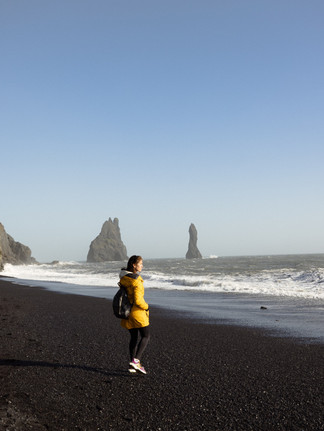
This popular beach with black volcanic sand is often underestimated by visitors. Reynisfjara is one of the most beautiful but also one of the most dangerous beaches in the world because the waves are unpredictable. One moment the ocean seems calm, and the next, a massive wave pulls you into the Atlantic. There’s even a traffic light at the entrance that indicates the level of danger for the day, so don’t ignore that. Parking costs around €7 for up to three hours, with each additional hour costing the same. All parking lots have cameras installed, so no one can evade payment.
You can walk to the beach, take some photos, admire the basalt columns rising from the cliffs, stroll around, and then head off to enjoy a fantastic hot dog not far from the beach. And remember – never turn your back to the ocean. 😊




Sixth Stop – Vík and Mýrdal
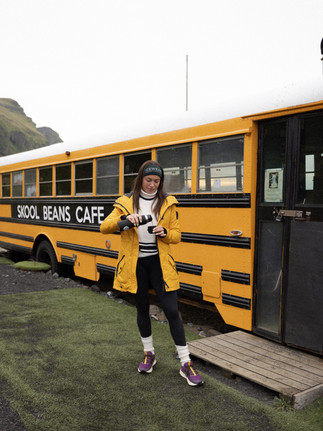
The last stop of a fulfilling and beautiful day. We settled into the Vík campsite, which cost us €28 for two people and a vehicle. At this campsite, showers are an additional €2 per person. This was our favorite campsite in terms of amenities and cleanliness. They have a communal space for gathering that includes a kitchen, which is great if the weather is bad and windy, so you don’t have to freeze while cooking outside. Right next to the campsite is the famous Skool Beans Café, which operates from 9 AM to 5 PM. Since we arrived late and left early, we missed out on the best coffee, as recommended, but it’s still a fun place for photos, even if it’s just with your own coffee in hand.



DAY 4 - Svartifoss, Diamond beach & Glacier lagoon, Vík and Mýrdal
We woke up at 6:30 AM as usual to hit the road early. The view of the hills above Vík, with the morning sun peeking over them, was spectacular. Coffee was ready, as was our new daily plan.
First Stop – Svartifoss ("Black Waterfall")
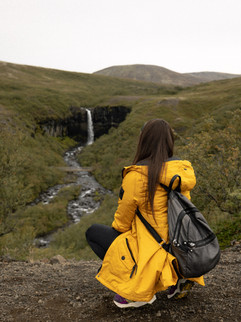
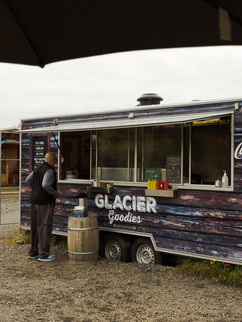
Svartifoss, like Reynisfjara beach, is famous for the basalt columns that surround the waterfall. You reach Svartifoss by walking a trail within Vatnajökull National Park. The hike takes about half an hour, a bit longer if you go all the way to the base of the waterfall in one direction, and along the way, you can hear smaller waterfalls cascading. On the way back, we stopped at an Icelandic fast food place at the parking lot—because you can’t leave without trying their specialties. We got a portion of fish and chips, and my heart was won over by the lobster soup.
Vatnajökull National Park is also the starting point for glacier excursions; you turn left for Svartifoss and right for the glacier, but those are mainly paid tours that equip you for the expedition. Personally, I didn’t have a strong desire to go to the glacier, but we certainly admired them from a distance.





Second Stop – Diamond Beach and Glacier Lagoon (Jökulsárlón)
Two beautiful attractions and our final destination before heading back. Diamond Beach is a black sand beach along the Atlantic Ocean where you can watch small and large ice chunks wash ashore. You can see the Jökulsárlón lagoon flowing into the Atlantic, right at the point where the forces collide and struggle.
Glacier Lagoon – the largest and most famous lagoon in Iceland, formed from the melting of the glacier that is part of the massive Vatnajökull ice cap I mentioned earlier. The lagoon is filled with large ice pieces that break off from the glacier and float in the water. You can pay for a boat ride on the lagoon, which costs €45 per person for a group tour or €80 per person for a small private tour. We were lucky enough to see a seal not far from the shore, so we didn’t pay for the boat ride. Parking is charged, but you don’t have to pay twice! There are two parking lots, but both cover the same parking zone, so you can drive to the next zone without paying again. If this is your final destination and you plan to head back to Vík, you can stop at a few lesser-known but still magical ice lagoons along the way!
Third Stop – Vík and Mýrdal
We liked the campsite in Vík so much that we decided to spend another night there. A fierce storm began just as we settled in, so we headed to the pizzeria across the street, where they serve pizza with black dough. The pizza was excellent, and I tried their local raspberry beer, Helga, for the first time—it was great, especially since I’m not a beer lover. We paid a little bit more than €80 for two pizzas and three Helgas, so eating out in Iceland is definitely not cheap. We cooked most of our meals ourselves, using a mini stove and grill that we took as extra while renting the vehicle.
Across from the campsite, there’s a mini shopping center with food, clothing, and traditional Icelandic souvenirs. The best investment for me was a pair of wool socks that I ruined as soon as I got back to Croatia. Please don’t wash wool in the machine. I know I shouldn’t have! 😊
Day 5 – Second Attempt at Skógafoss, Seljalandsfoss, and Landmannalaugar
First stop - Skogafoss
There was no lounging around like on the first day. We had a mission to enjoy coffee and breakfast with the most beautiful views, so by 7:30 AM, we were at Skógafoss, and it was perfectly calm and empty. There was no rainbow since it rained all night, but the power of the waterfall was three times stronger and more majestic.
We didn’t linger long since we had already been there, so we headed towards Seljalandsfoss.
Second Stop – Seljalandsfoss
Seljalandsfoss is one of the highest, most famous, and most beautiful waterfalls in Iceland. It’s special because you can walk behind the waterfall, so if you weren’t wet before, you definitely will be now. A little further from Seljalandsfoss is another hidden waterfall, Gljúfrabúi, which requires a little walk to reach. It’s hidden behind a large rock and nestled within a narrow canyon. The weather was rainy, and Seljalandsfoss drenched us so much that we didn’t feel like taking another shower, so we skipped it, even though they say this hidden one is quite special. Parking at Seljalandsfoss is charged.
Third Stop – Landmannalaugar
This location was recommended to us by the GO Campers office. It’s a beautiful area in the Icelandic highlands known for its colorful mountains, geothermal springs, and volcanic landscapes. It’s popular for hiking and is located within the Fjallabak Nature Reserve.
Following the route suggested by Google Maps, it seemed like we were driving all over the place, but the only route you can take without going off-road (important if you don’t want to drive through rivers) is route F208. The drive up is stunning, from the lava fields that stretch endlessly to random paths that lead you to volcanic craters, culminating in crossing a shallow part of a river, which is the final step to the Landmannalaugar campsite. Everything is beautiful!
The "parking" for the reserve costs €3 per vehicle upon entry, and they check before entering the campsite. The campsite for two people and a vehicle costs €39, but showering isn’t included. Showering costs €6 per person, which we didn’t pay because there’s a geothermal spring right next to the campsite where you can soak as long as you want for free. We didn’t hike because we didn’t have enough time, and the wind was so fierce that the thermal spring was a much more appealing option. We spent three hours at the spring since it was FREEZING outside, and the night turned out to be the coldest one yet.
At the campsite, there’s another interesting place called Mountain Mall. Three green buses make up this mini market, where you can buy groceries, local fresh cookies, and order hot drinks, including our favorite "fireball shot"—cinnamon schnapps. The second and third bus serve quick meals in a hikers' restaurant where you can sit and enjoy your order before heading back to the cold activities. Their cinnamon cookies are top-notch, but the cinnamon schnapps steals the show!
Day 5 – Þingvellir National Park, Silfra Freediving, and the Bridge Between Two Continents
First Stop – Silfra
After a cold night in the heights, we were in for an even chillier adventure at Silfra—diving between two continents, which is the only place in the world where you can dive between tectonic plates. There are many options and guided tours available on GetYourGuide for diving at Silfra, but freediving caught my eye since they are the only company that offers it. There were just three of us plus the guide, which gave us a special vibe and a sense of safety while diving. Other companies are packed—there can be 10-15 people—but in the end, we all meet in the water anyway.
The water in Silfra is icy—about 2 degrees Celsius—so we had on 7mm wetsuits. This didn’t change the fact that my face shrank so much from the cold that I felt like I’d just had the wildest rejuvenation treatment. We were in the water for no more than half an hour, which was more than enough. After the tour, we enjoyed hot chocolate, and it warmed us up outside. The tour cost us about €180 per person, but I saw significantly cheaper tours that offer snorkeling with a dry suit. It’s definitely an experience worth the money!
Second Stop – Þingvellir National Park
We skipped this national park on our first day to combine it with the Silfra diving. Þingvellir is the site where the oldest parliament in the world was established. Here, the Icelanders made laws until the 18th century. It is located in the valley between the North American and Eurasian tectonic plates and is a UNESCO site. You can walk around here for hours, and parking is charged.
Third Stop – The Bridge Between Two Continents
Since we were right between the continents, we decided to visit the bridge that connects the two tectonic plates, i.e., the two continents. The wind was fierce, so our visit was brief.
We looked for a campsite near the Blue Lagoon since that was our first destination for the next morning, and we found the Happy Campers campsite. It was the cheapest campsite so far, but we had the worst night there. Due to the chaotic weather and the fact that the campsite had no trees to shield the campers, we couldn’t sleep a wink because of the howling wind. This is the downside of camping in a tent!
Day 6 – Blue Lagoon and Reykjavik
First Stop – Blue Lagoon
The Blue Lagoon is one of the most famous geothermal spas in Iceland, set in a lava field and is one of the wonders of the world. It was created as a result of waste geothermal water from the Svartsengi power plant, rich in minerals—especially silica and sulfur, which give the lagoon its characteristic milky-blue color. We reserved our tickets a few days in advance, which I highly recommend if you don’t want to miss out. On their website, you can choose your arrival time, and the price varies depending on the time and packages. We chose 8 AM because it was the cheapest option (€90 per person), and there were the fewest people at that time. We took the basic package, which includes one of their popular face masks and a welcome drink. The mask was so good that I ended up buying one on the way out. Classic tourist behavior, I know, but the mask is truly spectacular! 😊
We spent three hours there, which was just enough to avoid the crowds that started to form.
Second and Final Stop of This Trip – Reykjavik
Before heading into downtown Reykjavik, we decided to settle in at the first Reykjavik Eco Campsite where we had stayed the first night. The weather was excellent, so we took the opportunity to air out our bedding. Traveling in a camper is fantastic, but the problem in a country like Iceland is that you don’t have anywhere to dry your clothes; instead, you spread them out in the car and hope they’ll be dry by the time you need to wear them.
We walked to the city center, which took about 20 minutes to reach the famous Hallgrimskirkja church. The city is beautiful, but after all the natural wonders we had seen, I was least interested in it. We strolled through the well-known streets, enjoyed the best carrot cake, spent time in some amazing record and book shops, and visited the famous church. The city really has everything you need—a blend of modern and traditional. One thing I couldn’t try, although I love tasting local specialties, was fermented shark. Sorry, Iceland, but this time the Viking spirit was missing in me.
Our flight was in the early morning hours, so we didn’t linger in downtown Reykjavik to experience the nightlife. We returned the car with a full tank to its designated spot at the airport, and the return system was very straightforward.
In conclusion, what most people asked me was: Is Iceland really as expensive as they say?
Well… what I always like to say is—nothing is expensive; it’s just that some things you simply can’t afford. If you eat in restaurants every day—it’s expensive; if you sleep in fancy accommodations every night—it’s expensive; if you have coffee every morning in coffee shops—it’s expensive; if you go on every possible paid excursion—it’s expensive. It’s expensive to the extent that you allow yourself to spend. I might not spend money on restaurant food every day, but I’ll buy a silly face mask for €60 or go diving for €200. I don’t think Iceland is any more expensive than Croatia today, but smart planning can definitely help you save some money.
We definitely plan to return to Iceland, as we only visited the southern part. Seven days is simply too short to see everything properly without wearing out your back from driving. Our primary goal was to relax, so the option of spending the whole day flying from destination to destination wasn’t feasible, and we didn’t regret it! 😊

Comments